Preserve trust
AI entered as a beta layer, not as a replacement for the established search system.
Case Study / AI Search
I designed an optional AI-search beta for ImmoScout24 that protected familiar search behavior while giving product and engineering teams a practical way to learn.
The Tension
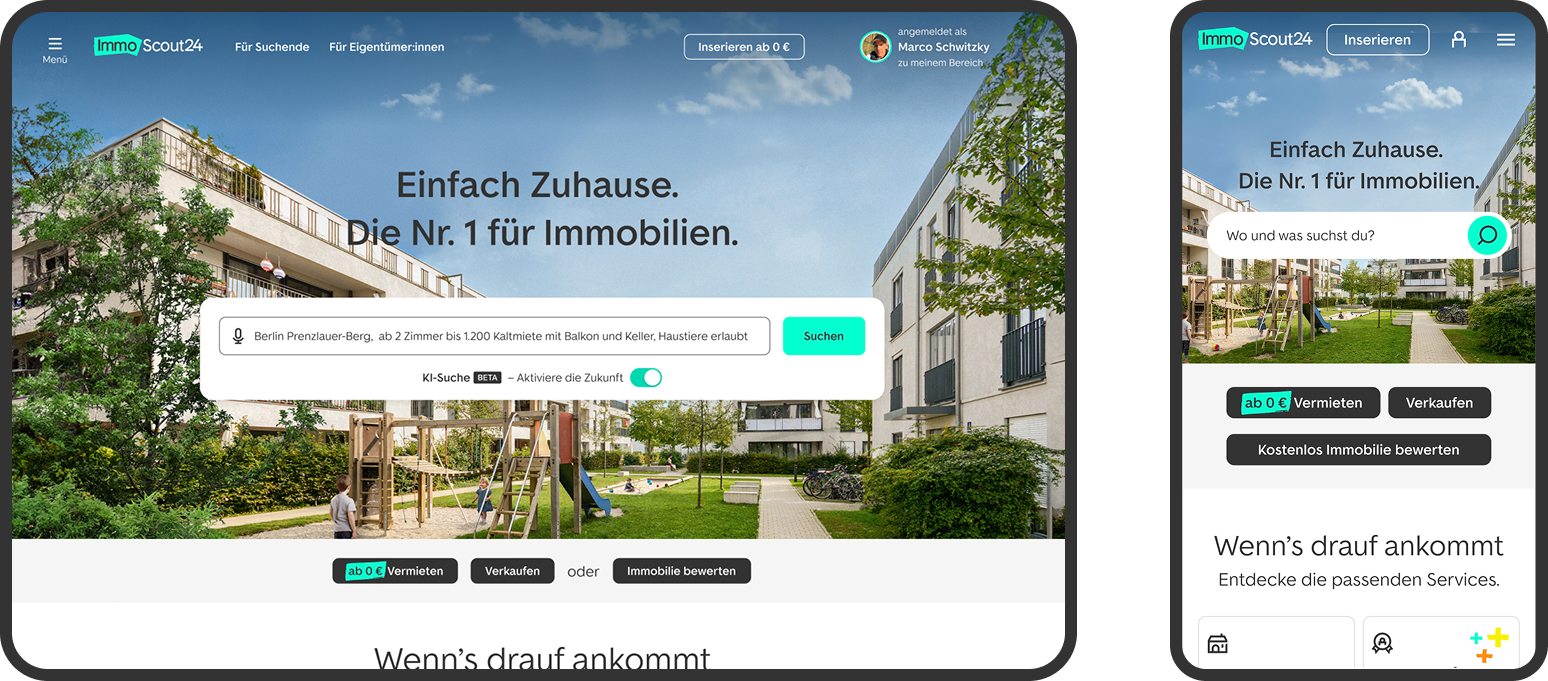
ImmoScout24 explored how AI could support discovery inside its core search journey. The product challenge was not simply to introduce AI, but to do it in a way that respected a search model millions of users already understood and trusted.
The risk was classic innovation theater: adding a novel interaction without improving the actual decision journey. My design responsibility was to create a testable experience that made room for learning without forcing users to abandon clarity and control.
Design Judgment
AI entered as a beta layer, not as a replacement for the established search system.
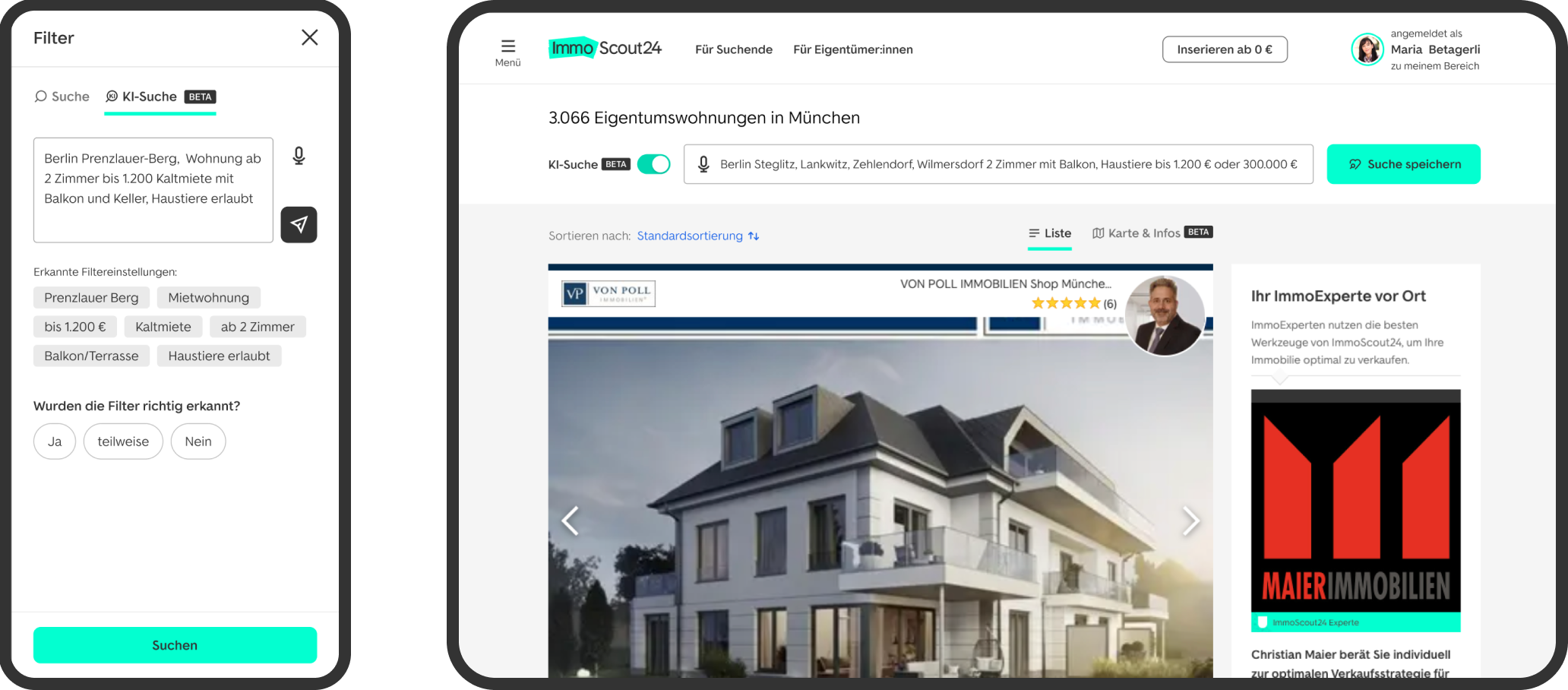
User prompts were translated into familiar filters so people could understand and adjust the result.
The experience was optional and reversible, which made experimentation safer for users and the business.
Approach
The first version treated AI as an alternative input method. Text and voice prompts were interpreted into the existing filter logic, which allowed the team to move quickly while preserving the underlying search behavior.
In usability testing, users found AI interesting but still preferred explicit filters for serious real estate decisions. That insight shaped the product direction: AI should support user intent, not hide the rules of the system.
Research Signals
Most users preferred the search model they already knew, especially for high-stakes housing decisions.
It was perceived as technically interesting, but not useful enough for the context.
Users wanted to see how AI interpreted their intent and needed easy ways to correct it.
Outcome
AI adoption remained limited compared to classical search, but the beta did not weaken the performance or trust of the core journey.
The initiative gave product, design, data and engineering teams concrete experience with generative AI systems in a real marketplace context.
AI works best in complex decision products when it increases clarity and control instead of asking users to surrender both.
Next
Contact
 LinkedIn